





Probe Station
The Probe Station Manufacturer!
Dexing Magnet is a large enterprise with excellent quality and perfect service in the international magnetometer and machinery industry.


Why choose us
Professional Team
It has a group of experienced technicians and managers in the magnetometer and magnetic industries.
Our Product
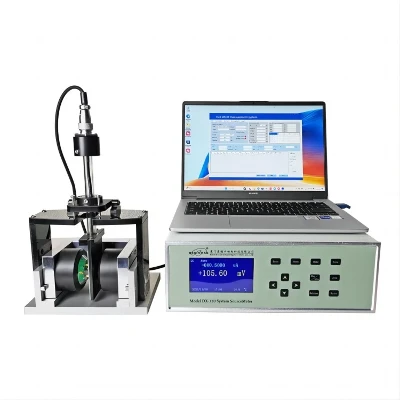
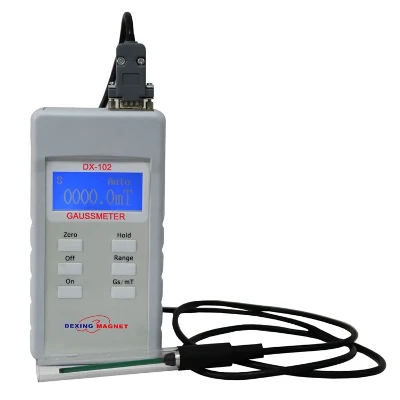
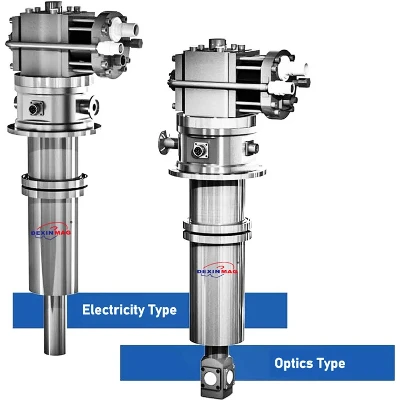
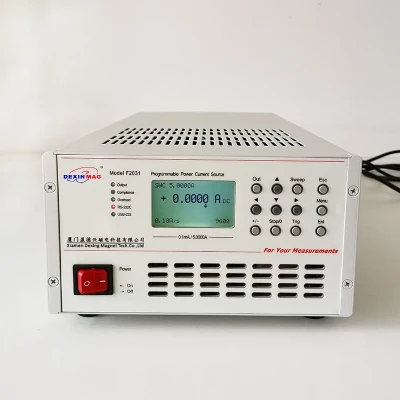
Vibrating Sample Magnetometer, Hall Effect System, Gauss Meter, Flux Meter, Electromagnets, Helmholtz Coils, Magnetizers, Magnetic Material Property Testing Systems
Production Market
At present, the Dexinmag company has established cooperative relations with many schools and institutions at home and abroad for more than 30 years, such as Singapore Polytechnic University, Caltech, University of Hong Kong, etc.
Customized service
Equipment quality Reliable, electrical components and hydraulic transmission components are imported from Japan's Mitsubishi and Italy, and can provide qualified products and good after-sales service.
|
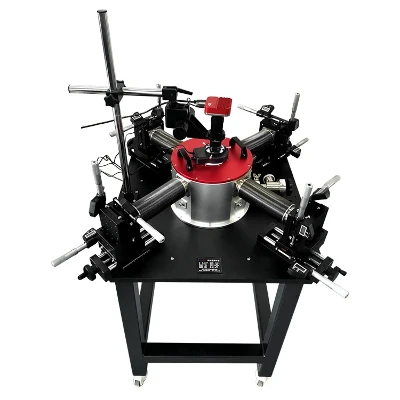
High and low temperature vacuum magnetic field probe station |
|||
|
Model |
DXTPS1 |
DXTPS2 |
DXTPS3 |
|
Vacuum degree |
Maximum vacuum 10-8Pa |
||
|
Cavity Material |
Non-magnetic stainless steel or aluminum alloy |
||
|
Magnetic Field Range |
2000Gs @ 50mm |
5000Gs @ 50mm |
1T @ 50mm |
|
Magnetic Field Direction |
Horizontal (can be designed according to user requirements in the vertical direction) |
||
|
Power supply |
Bipolar power supply ± 50A |
Bipolar Power Supply ± 70A |
Bipolar Power Supply ± 90A |
|
Power supply stability |
50ppm optional 10ppm |
||
|
Refrigeration mode |
Liquid helium/liquid nitrogen refrigeration/closed cycle refrigerator |
||
|
Temperature Range |
5 K-325K optional 500K |
||
|
Temperature Range |
65 K-325K optional 600K |
||
|
Temperature Control Resolution |
0.001K temperature controller related |
||
|
Temperature stability |
Better than 0.1K depending on the temperature controller |
||
|
Temperature sensor |
Silicon diode/PT 100 |
||
|
Sensors |
One sample table, one radiation screen and one probe arm. |
||
|
Sample table size (max) |
Φ50mm, flatness ≤ u7m |
||
|
Sample table fixing method |
Vacuum Silicone Grease/Spring Presses |
||
|
Sample table material |
Gold-plated oxygen-free copper |
||
|
Microscope Travel |
X, Y plane 2*2inch, accuracy 1um, Z axis travel ≥ 50.8mm |
||
|
Magnification |
16 ~ 100X/20 ~ 4000X |
||
|
Vacuum chamber observation window size |
1 inch |
1.5 inch |
2 inch |
|
Window Materials |
Fused silica (optional K9, calcium fluoride, etc.) |
||
|
Number of probe arms |
2, 4, 6, 8 optional |
||
|
Probe Arm Travel |
25 mm-25mm-12mm replaceable |
||
|
Mechanical accuracy |
10um/ 2um/ 1um/ 0.7um |
||
|
Interface form |
Ordinary vacuum joint/three coaxial joint/BNC/ SMA, etc |
||
|
Probe diameter |
0.51mm |
||
|
Needle tip diameter |
10um/ 5um/ 1um optional |
||
|
Probe material |
Tungsten/GGB |
||
|
Supply voltage |
AC220V 50Hz/60Hz |
AC380V 50Hz/60Hz |
|

Flexible structure: Flexible structure design except for the magnet, magnetic field uniformity is ±1%@φ1mm.
High accuracy: Real-time monitoring of magnetic field strength with accuracy better than 1% and resolution better than 0.02mT.
Strong compatibility: Supports multiple wafer sizes and probe types to meet a variety of testing needs.
Efficient Testing: Provides Z-axis probe platform fast lifting function to improve testing efficiency.
Basic Components of A Probing Station
Chuck – A device for holding the wafer or die without causing any damage to it.
Manipulators – For positioning the probes on the device under test (DUT).
Stage – For positioning the chuck in X, Y, Z and Theta (θ).
Probe tips & arms – Mounted onto the manipulator where they contact the device directly.
Platen – For holding the manipulators and bringing the probes into contact with the device.
Optics – For observing and magnifying the device under test and probe tips.
Applications of Probe Station
Wafer-Level Testing
Probe stations are essential for wafer-level testing in fields like semiconductor manufacturing. Before a wafer is diced into individual chips, it undergoes testing to assess the performance of each die. This early-stage testing helps manufacturers identify faulty dies, reducing waste and improving overall production efficiency.
Device Characterization
Probe stations are also used to measure a wide range of electrical parameters, including DC characteristics like current-voltage (I-V) curves and capacitance-voltage (C-V) curves, as well as RF characteristics such as S-parameters. By analysing these measurements, engineers can gain insights into the device's performance, reliability, and suitability for specific applications.
Failure Analysis
When a device malfunctions, a probe station can be used to pinpoint the root cause of the failure. By systematically probing different parts of the device, engineers can identify defective components or faulty connections. This information is crucial for improving future designs and manufacturing processes.
Research and Development (R&D)
In R&D environments, probe stations are used to test new materials, device structures, and fabrication processes. Researchers can use them to explore the electrical properties of novel materials like organic semiconductors, 2D materials, and nanostructures.
Optoelectronic Testing Stations
In addition to electrical testing, probe stations can be used to test optoelectronic devices, such as photodiodes, LEDs, and laser diodes. By integrating optical sources and detectors into the setup, engineers can measure the performance of devices that interact with light, which is crucial for applications in fibre optics, solar cells, and display technologies.
Life Sciences
These instruments are also crucial in electrophysiology, where they are used to position microelectrodes with extreme precision to record electrical activity from individual neurons or muscle cells. This allows researchers to study ion channel behaviour, synaptic transmission, and neural circuitry in real-time. In cell biology, micromanipulators are used for various tasks, such as injecting biological molecules into cells, performing patch-clamp experiments, or isolating specific cells for further analysis. They are also employed in genetic engineering for microinjection of DNA or RNA into embryos or cells, and in microdissection to manipulate or dissect small tissue samples under a microscope.
Deliver, Shipping And Serving
Delivery Time
We promise to complete production and shipment within 7 working days after receiving the order.
Transportation
Professional packaging and safe transportation methods are used to ensure the safety of the equipment during transportation.
After-sales service
We provide comprehensive after-sales service, including equipment installation guidance, operation training, maintenance and so on. Meanwhile, we have a 24-hour customer service hotline to answer your questions at any time.


FAQ
As one of the leading probe station manufacturers and suppliers in China, we warmly welcome you to buy customized probe station from our factory. All equipment are with high quality and competitive price.
AC And DC Gauss Tesla Meter, BH Tracer Hysteresis Graph Test System, VSM Magnetometer