




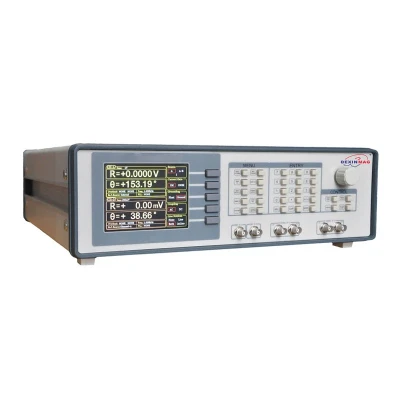

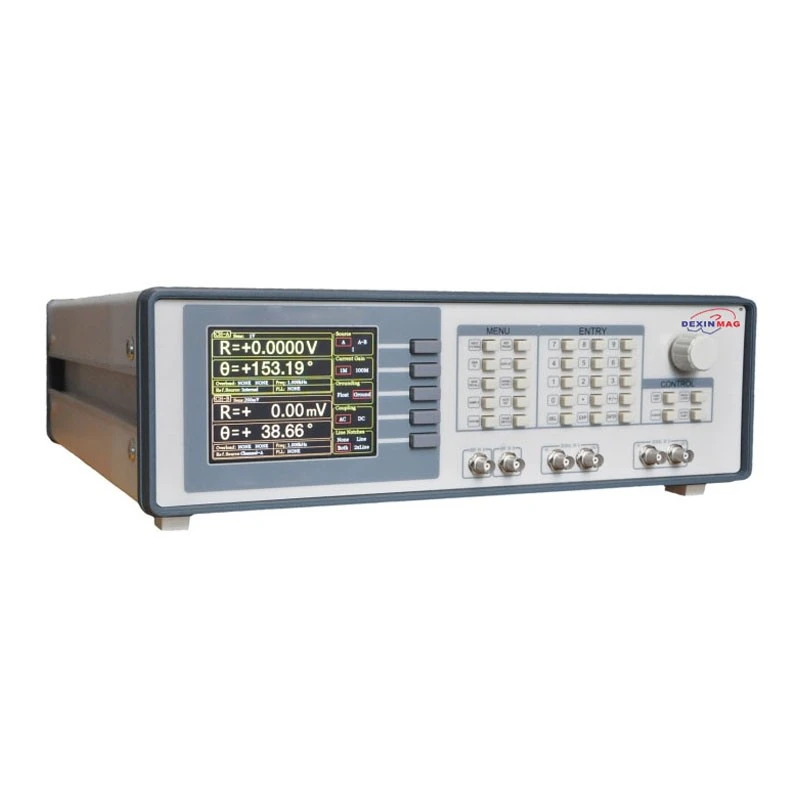
Lock-in Amplifier
The Lock-in Amplifier Manufacturer!
Dexing Magnet is a large enterprise with excellent quality and perfect service in the international magnetometer and machinery industry.


Why choose us
Professional Team
It has a group of experienced technicians and managers in the magnetometer and magnetic industries.
Our Product
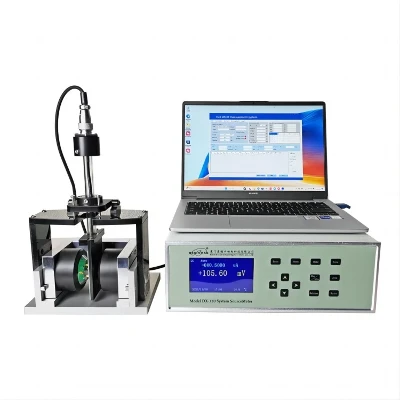
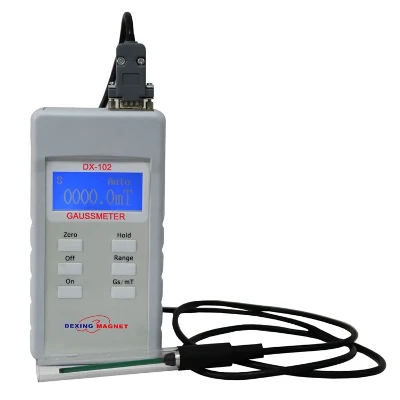
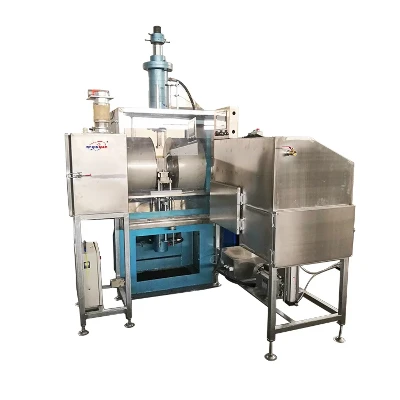
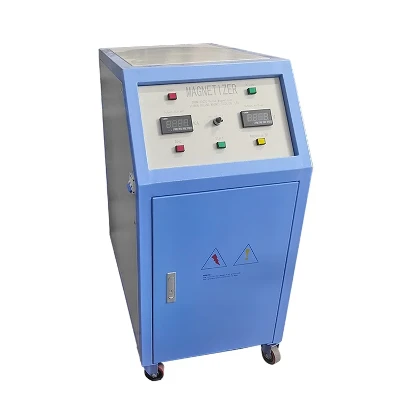
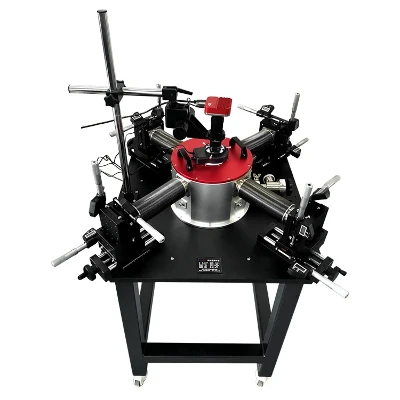
Vibrating Sample Magnetometer, Hall Effect System, Gauss Meter, Flux Meter, Electromagnets, Helmholtz Coils, Magnetizers, Magnetic Material Property Testing Systems
Production Market
At present, the Dexinmag company has established cooperative relations with many schools and institutions at home and abroad for more than 30 years, such as Singapore Polytechnic University, Caltech, University of Hong Kong, etc.
Customized service
Equipment quality Reliable, electrical components and hydraulic transmission components are imported from Japan's Mitsubishi and Italy, and can provide qualified products and good after-sales service.
|
Voltage input Mode |
Single-ended or Differential |
|
Full-scale Sensitivity |
1 nV to 1 V in a 1-2-5 sequence |
|
Current input |
106 or 108 V/A |
|
Impedance |
|
|
Voltage |
10 MΩ//25 pF,Ac or DC coupling |
|
Current |
1 kΩ to virtual ground |
|
C.M.R.R |
>100 dB (within 100kHz), >90dB (beyond 100kHz) |
|
Dynamic reserve |
>100 dB |
|
Gain accuracy |
0.2% typ, 1% max |
|
Voltage Noise |
|
|
997Hz |
9 nV/√Hz |
|
Current Noise |
|
|
97 Hz |
0.13 pA/√ Hz |
|
997Hz |
0.14 pA/√ Hz |
|
Line filters |
50/60 Hz and 100/120 Hz |
|
Grounding |
BNC (A/I, B)shield can be grounded or floated via 10 kΩ to ground |
|
Stability |
2ppm/℃ |
Advantages of digital lock-in amplifiers
High sensitivity and selectivity: Lock-in amplifiers can detect signals even if they are buried in noise, with sensitivities down to nanovolts or even picovolts.
Effective noise reduction: By using phase-sensitive detection and only amplifying signals at a specific frequency and phase, lock-in amplifiers can effectively filter out noise that is not at the reference frequency, including broadband noise.
Signal recovery from noisy environments: They excel in extracting signals from highly noisy environments, making them suitable for precise measurements in physics, chemistry, and biology, among other fields.
Phase and amplitude measurement: Lock-in amplifiers can measure both the amplitude and the phase of the signal relative to the reference, providing comprehensive signal analysis capabilities.
Versatile application: They are used in a wide range of applications, from quantum computing and optical studies to vibration analysis and bioelectrical research.
Dynamic range: High dynamic range allows lock-in amplifiers to process signals of varying amplitudes, from very small to relatively large, without changing the setup or losing accuracy.
Cell imaging with a digital lock-in amplifier
A digital lock-in amplifier enables dual-channel, real-time imaging using techniques such as stimulated Raman scattering (SRS) microscopy. By using a high-quality digital lock-in amplifier, researchers can perform simultaneous, dual-channel imaging of live cell samples.
Dark matter detection with a digital lock-in amplifier
Researchers worldwide are pushing the limits of particle physics in order to successfully detect dark matter. By using a digital lock-in amplifier, they can leverage high levels of flexibility and performance to measure signals down to the nV level.
Quantum sensing with a digital lock-in amplifier
In applications such as quantum sensing and optical clock development, system stability is paramount. With digital instrumentation, entire test setups can be consolidated into a single device, leading to more stable results and reduced loss in the system.
Deliver, Shipping And Serving
Delivery Time
We promise to complete production and shipment within 7 working days after receiving the order.
Transportation
Professional packaging and safe transportation methods are used to ensure the safety of the equipment during transportation.
After-sales service
We provide comprehensive after-sales service, including equipment installation guidance, operation training, maintenance and so on. Meanwhile, we have a 24-hour customer service hotline to answer your questions at any time.


FAQ
As one of the leading lock-in amplifier manufacturers and suppliers in China, we warmly welcome you to buy customized lock-in amplifier from our factory. All equipment are with high quality and competitive price.
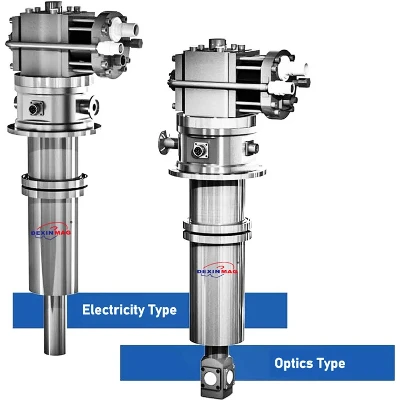
High Temperature Hall Measurement Setup, Design And Installation Of Helmholtz Coil, Closed cycle Cryostat